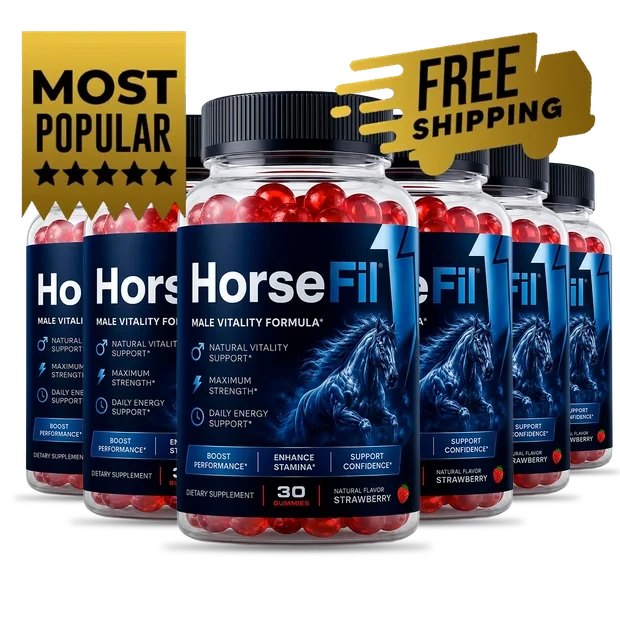
All seven actives with botanical names, published research dosages, honest evidence grading and the safety interactions worth knowing before you order.
Below is every active ingredient listed on the HorseFil label, with the botanical name, the dosages used in published research, and an honest assessment of how strong the evidence is. Where the evidence is weak, we say so.
Typical research dosage: 200–400 mg daily of standardised extract.
Evidence strength: Moderate, population-dependent.
A root native to Malaysia and Indonesia, used traditionally as a tonic. It is the ingredient with the most direct relevance to the product's core claim. Randomised trials have examined its effect on free testosterone, cortisol and measures of stress, with the clearest results in men who began with low testosterone, older men, and men under significant physical stress.
What the evidence does not support is the idea that it substantially raises testosterone in men whose levels are already normal. Full article on Tongkat Ali →
Typical research dosage: 1,500–3,000 mg daily.
Evidence strength: Limited but positive for libido; weak for energy.
A cruciferous tuber grown at high altitude in Peru, consumed there as a food for centuries. Small randomised trials have found improvements in self-reported sexual desire, and notably these occurred without measurable changes in testosterone, oestrogen or luteinising hormone — the mechanism appears to be something other than hormonal.
The dosage figure above deserves attention: gram-level amounts are difficult to fit into a gummy containing six other ingredients. Full article on maca →
Typical research dosage: 300–600 mg daily of root extract.
Evidence strength: Good — the strongest in this formula.
An adaptogen from Ayurvedic medicine and by some distance the best-researched ingredient here. Multiple placebo-controlled trials have examined perceived stress, serum cortisol and sleep quality, with reasonably consistent positive findings. The NCCIH summary is a good neutral starting point.
Safety note that deserves more prominence than it usually gets: there have been documented cases of liver injury associated with ashwagandha supplementation, catalogued in the NIH LiverTox database. These are rare, but if you have any liver condition or take medication affecting the liver, this ingredient warrants a conversation with your doctor. Full article →
Typical research dosage: Not well established in humans.
Evidence strength: Weak — mechanism is interesting, human data is thin.
The active compound is icariin, which demonstrates PDE5-inhibiting activity in laboratory studies. Because PDE5 inhibition is how prescription erectile dysfunction medications work, this gets cited heavily in marketing. The honest picture: icariin's activity in these studies is dramatically weaker than pharmaceutical agents, and the concentrations involved are not achievable through oral supplementation at normal dosages.
Interaction warning: may interact with anticoagulants and blood pressure medication. Full article →
Typical research dosage: 300–600 mg dietary nitrate.
Evidence strength: Good for exercise economy — at research dosages.
One of the better-evidenced sports nutrition ingredients in existence, with consistent findings on reduced oxygen cost during submaximal exercise and improved time to exhaustion. The effect is most pronounced in recreational rather than highly trained athletes.
The dosage question is unavoidable here. Trials use concentrated beetroot juice shots specifically because delivering several hundred milligrams of nitrate requires volume. A powdered extract in a gummy is a different proposition entirely. Full article →
Typical research dosage: 3–6 g daily.
Evidence strength: Established mechanism; dosage-critical.
A semi-essential amino acid and the direct substrate for nitric oxide synthesis. The biochemistry is not in dispute. The practical issue is that effective dosages are measured in grams, and a gummy typically weighs two to four grams in total including sugars, gelling agents and flavouring.
Safety note: L-Arginine can lower blood pressure. If you take antihypertensive medication, this is a genuine interaction, not a theoretical one. Full article →
Typical research dosage: 100–300 mg daily.
Evidence strength: Moderate for vascular markers.
A source of oligomeric proanthocyanidins with research on antioxidant activity, blood pressure and capillary integrity. Of all the ingredients here, this is the one whose research dosage is most plausibly achievable in a gummy — it is also the one contributing least to the product's headline claims. Full article →
Add up the mid-point research dosages of these seven ingredients and you arrive at somewhere between four and eight grams of active material daily. A single gummy cannot hold that — the physical volume is not available once you account for the gelatin or pectin base, sweeteners and flavouring that make it a gummy at all.
This does not mean the product contains nothing. It means the amounts are necessarily lower than the studies the ingredients' reputations are built on, and without a published panel there is no way to know by how much. Anyone telling you a seven-ingredient gummy delivers clinical dosages of all seven is not being straight with you.
Our practical suggestion: email customer support and ask for the full supplement facts panel before you order. A manufacturer confident in its formula will provide it.
All three package options and the 60-day guarantee are shown at the official checkout.
Check Current Price